Before the Sun Came Up, You Were Already Working: The Paper Route and the Education Nobody Gave You a Grade For
Somewhere around 5:45 in the morning, before your parents were up, before your siblings had stirred, before the neighborhood had made a single sound, your alarm went off. Not a gentle chime. Not a phone vibrating on a nightstand. A real alarm — the kind that rattled the whole table and made the dog lift her head from across the room.
You were eleven, maybe twelve. And you had a job to do.
The paper route doesn't really exist anymore, not in the way it did. The neighborhood kid on the bicycle, the canvas bag slung over one shoulder, the satisfying thwack of a folded newspaper landing exactly right on a front porch — that whole picture has faded out of American life so quietly that most people didn't even notice it go. But for those of us who lived it, that humble morning ritual left a mark that no classroom lesson ever quite matched.
The Setup Was Simple. The Reality Was Not.
It always looked easy from the outside. You picked up the papers, you delivered the papers, you went home. Thirty minutes, tops, right?
Wrong.
First came the folding. Depending on your route and your delivery style, you might spend twenty minutes just preparing the papers — folding them into thirds or quarters, snapping rubber bands around each one with a satisfying pop, stacking them in your bag in the rough order of your route so you weren't digging around at every stop. It was logistics work. Nobody called it that, but that's exactly what it was.
Then came the weather. Rain turned newspapers into soggy bricks if you weren't fast enough or careful enough. Snow meant your bike stayed in the garage and your legs did the work instead. Summer meant humidity and sweat and the strange pleasure of being the only person awake in the whole neighborhood while the sky went from dark blue to pale orange. You learned, fast, that the world didn't care about your comfort level. The papers went out either way.
The Route Was Your Territory
There's something quietly powerful about knowing a neighborhood better than most adults who live in it. After a few weeks on a route, you knew which house had the dog that charged the fence, which driveway had the cracked concrete you had to avoid on your bike, which porch light was always on and which one was always dark. You knew the rhythms of your little corner of the world in a way that felt almost proprietary.
Mrs. Patterson at the yellow house on Elm wanted her paper tucked behind the storm door. The Garcias wanted it near the mailbox, not on the steps. Mr. Hollis didn't care where it landed as long as it was there by six. You kept all of this in your head. No app, no notes, no reminders — just memory and repetition and the quiet pride of getting it right every single morning.
That kind of spatial memory, that attention to individual people's preferences, that low-key customer service instinct — school never taught you any of it. The route did.
Collection Day and the Art of the Awkward Knock
If the daily delivery was the job, collection day was the education.
Once a month — or sometimes once a week, depending on your setup — you had to go back to every house and actually ask people for money. You knocked on the door. You waited. You said your little line about the paper. And then you stood there while a grown adult either paid you promptly, told you to come back later, or looked genuinely confused about the fact that they owed you anything at all.
This was uncomfortable. This was awkward. This was, it turns out, exactly what the world was going to keep asking you to do for the rest of your life.
Learning to knock on a stranger's door and ask to be paid for work you'd already done — with a straight face, with politeness, without backing down — is a skill that most adults still struggle with. You learned it at twelve, standing on someone's porch in the cold, holding a little receipt book and trying to make eye contact.
Nobody talked about building confidence back then. But that's what was happening.
The Money Was Real, and That Was the Point
You didn't get an allowance for this. You didn't get a participation trophy. You got a check — or more likely, cash — and the amount on it was directly tied to how many customers you had, how well you'd done your job, and whether you'd managed to actually collect from everyone on your list.
For a lot of kids, this was the first real money they'd ever earned. Not birthday money from grandma. Not a dollar for doing the dishes. Money that came from a transaction, from a service rendered, from showing up every single morning whether you felt like it or not.
That distinction matters more than it sounds. When you earn something, you think about it differently. You weigh it. You make choices with it. The paper route taught kids to think about money as something you make, not something you receive — and that mental shift is one of the most valuable things a young person can learn.
What Gig Apps Can't Replicate
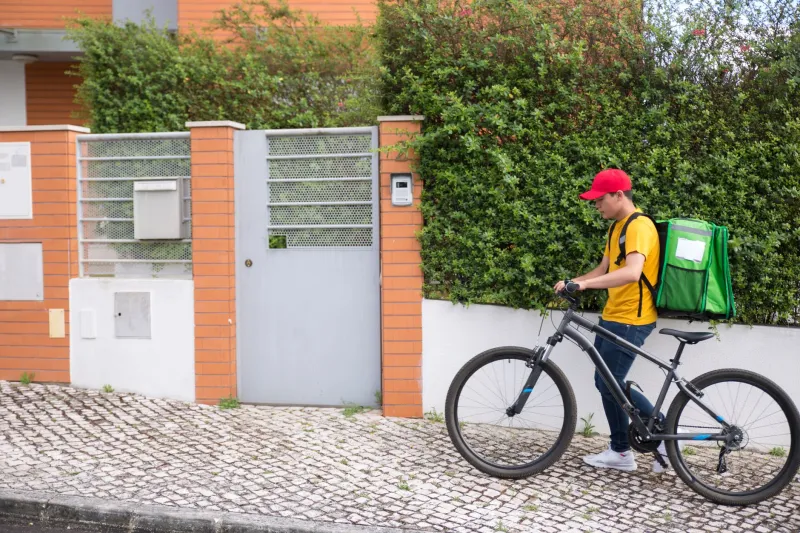
Today, the closest equivalent might be delivering for DoorDash or driving for Uber. And those jobs have their own dignity and their own skill set, no question. But there's something fundamentally different about a paper route that the gig economy can't quite reproduce.
The route was yours. Not assigned to you by an algorithm based on who was closest — yours, by relationship, by repetition, by the fact that these were your neighbors and they knew your face. There was accountability built into the geography. If you skipped Mrs. Patterson's porch, she'd call the newspaper, and the newspaper would call your house, and your mom would be waiting for you when you got home.
That loop — action, consequence, relationship, accountability — is the kind of feedback system that builds character in a way that a star rating on an app just doesn't.
A Good Old Days Job If There Ever Was One
The paper route is mostly gone now. Daily print subscriptions have dwindled, and where papers are still delivered, it's usually done by adults in cars, not kids on bikes. The whole ecosystem that made it possible — the local newspaper, the neighborhood circulation model, the idea that a twelve-year-old could responsibly manage a small business territory — has quietly dissolved.
But the memory of it is still sharp for those who lived it. The cold mornings. The rubber bands. The satisfying rhythm of a route you knew by heart. The weird pride of being done with work before most people had eaten breakfast.
Those early mornings made us something. Not just more responsible, though they did that too. They made us feel capable — genuinely, practically capable — in a way that's hard to manufacture and impossible to fake.
And honestly? That feeling was worth every 5:45 alarm.