Bike Until Dark: The Bittersweet Truth About the Childhood We Can't Stop Missing
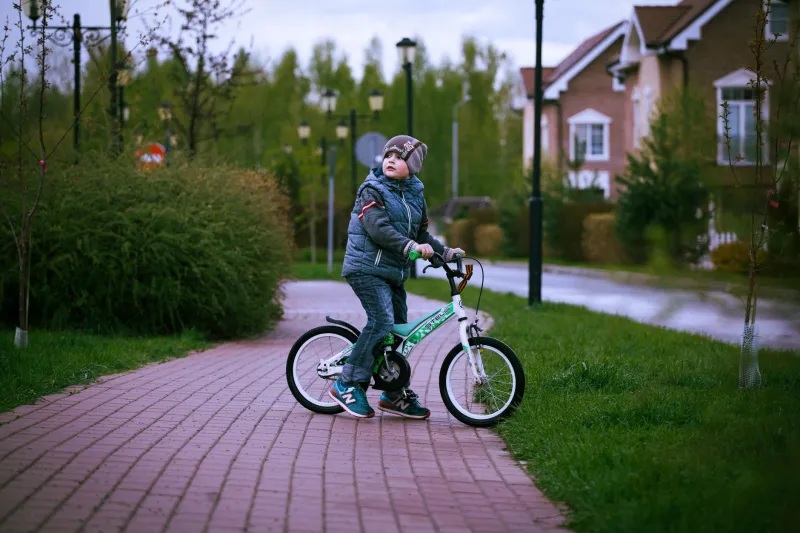
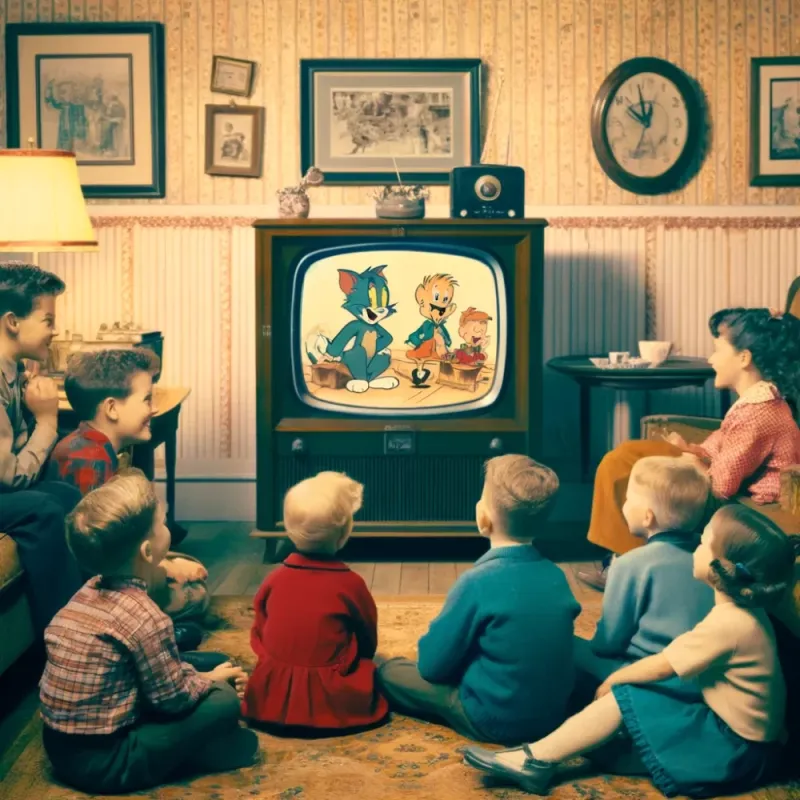
Somewhere around the summer you turned ten, you probably had a day that looked something like this: you woke up, ate a bowl of cereal with the TV on too loud, and then disappeared out the front door. Maybe you went to a friend's house. Maybe you rode your bike to the creek, the park, the empty lot behind the strip mall where older kids sometimes hung out. Maybe you just wandered, with no destination and no particular plan, until hunger or the darkening sky told you it was time to head home.
Nobody knew exactly where you were. Nobody could reach you. And somehow, everything was fine.
For a huge chunk of Americans who grew up in the eighties and nineties, that memory lives in the body like a second heartbeat. It comes up at dinner parties, on social media threads, in the specific ache you feel watching your own kid stare at a screen on a Saturday afternoon. We used to just go outside, you think. We used to just... be.
The Landline as a Leash (and a Lifeline)
Let's talk about the phone for a second, because the landline was a whole social infrastructure that doesn't get enough credit.
Calling a friend in the nineties was a commitment. You dialed the number — which you had memorized, because you had to — and one of their parents might answer. You had to say hello, identify yourself, maybe make small talk. Then your friend came on and you figured out the plan. If they weren't home, you tried again later, or you just showed up at their house and knocked. If nobody answered the door, you moved on to the next option.
The whole system required patience and a tolerance for uncertainty that feels almost quaint now. But it also meant that when you finally connected with your friends, there was a sense of accomplishment. Plans that came together felt earned. And when plans fell apart — when nobody was around and you were stuck with yourself on a slow Tuesday in July — you had to figure out what to do with that.
Boredom, it turns out, was a feature. Psychologists have been saying for years that unstructured time is where creativity lives, where kids learn to self-regulate, where imagination gets its exercise. The eighties and nineties handed that out in abundance, completely by accident.
The Geography of Freedom
There was also a physical dimension to that childhood that's hard to explain to someone who didn't live it. The neighborhood had a shape. You knew every yard, every shortcut, every dog that would bark and every one that wouldn't. Your world was walkable and explorable and genuinely yours in a way that required no screen, no app, no adult coordination.
Kids ranged. That's the word for it — they ranged. Studies of childhood mobility across generations show a dramatic contraction in the geographic range kids are allowed to operate in independently. A kid in 1970 might have roamed a mile or more from home without a second thought. By the 2010s, that radius had shrunk to something closer to the front yard.
What filled the space left by that vanished freedom? Structured activities, mostly. Organized sports with uniforms and coaches and schedules. Playdates that required calendar coordination between parents. Supervised everything. Kids got safer in measurable ways and lost something harder to measure in the process.
The Nostalgia Is Real, and So Is the Contradiction
Here's where it gets honest, and a little uncomfortable.
The same Gen X parents and older millennials who get misty-eyed about riding bikes until dark are, statistically, the ones who don't let their own kids do it. The fear is real, even if the actual crime statistics suggest American neighborhoods are safer now than they were in the era being romanticized. The perception of danger has expanded while the actual danger contracted, and that perception shapes behavior regardless of the data.
So we hold two things at once: genuine warmth for a childhood that felt freer, and a genuine inability to replicate it for our own kids without a low-grade anxiety that never quite goes away. It's not hypocrisy exactly. It's more like a grief for a specific kind of trust — trust in the neighborhood, trust in the world, trust that things would probably be fine — that's hard to summon back once it's gone.
Some parents are trying. The "free-range parenting" movement of the last decade was a conscious attempt to push back against helicopter culture and restore some of that old latitude. It generated genuine controversy. In a few states, parents were investigated by child protective services for letting their kids walk to the park alone. The culture had shifted that far.
What the Sleepover Actually Was
If you want to understand eighties and nineties childhood, understand the sleepover.
The sleepover was a whole world. It was staying up past midnight watching movies your parents would have had opinions about. It was whispered conversations in the dark that went places no adult-supervised interaction ever went. It was the particular freedom of being in someone else's house, with someone else's rules (or lack of them), eating cereal at 11pm and feeling like you'd gotten away with something.
There was no group chat updating your parents on the vibe. There was no way to be reached if someone got homesick except to call from the landline and ask to be picked up, which felt like a social catastrophe significant enough that most kids just... pushed through. You learned to self-soothe. You learned that discomfort was temporary. You learned, without anyone teaching you, that you could handle more than you thought.
The Good Old Days Were Also Just... Days
It's worth being clear-eyed about this, too. Not every kid in those decades had a golden, sun-drenched childhood of bike rides and sleepovers. Plenty of kids were lonely, or bullied, or dealing with things at home that no amount of unstructured outdoor time could fix. The nostalgia lens softens a lot of edges.
And some of what we've gained is genuinely good. Kids today have access to communities and information and creative tools that would have felt like science fiction in 1988. A kid who would have been isolated by geography or circumstance in the nineties can find their people online. That matters.
But the texture is different. The slowness is gone. The boredom that used to stretch out like a summer afternoon — long and a little uncomfortable and full of possibility — has been filled in. Every gap gets plugged by a screen.
What We're Actually Missing
When Gen X and older millennials talk about the childhood they miss, they're usually not really talking about the specific things — the tapes, the landlines, the banana-seat bikes. They're talking about a feeling. A feeling of time that moved slowly enough to really inhabit. Of a world that was small enough to know thoroughly. Of a self that was still being figured out, without documentation or performance.
We can't hand that back to our kids exactly as we received it. The world changed, and we changed with it. But maybe we can make space for some version of it — a little more wandering, a little less scheduling, a little more trust that boredom is not a problem to be solved.
The streetlights will come on eventually. Let them stay out until then.