Blurry, Faded, and Absolutely Perfect: The Instant Camera Obsession We Didn't Know We Needed
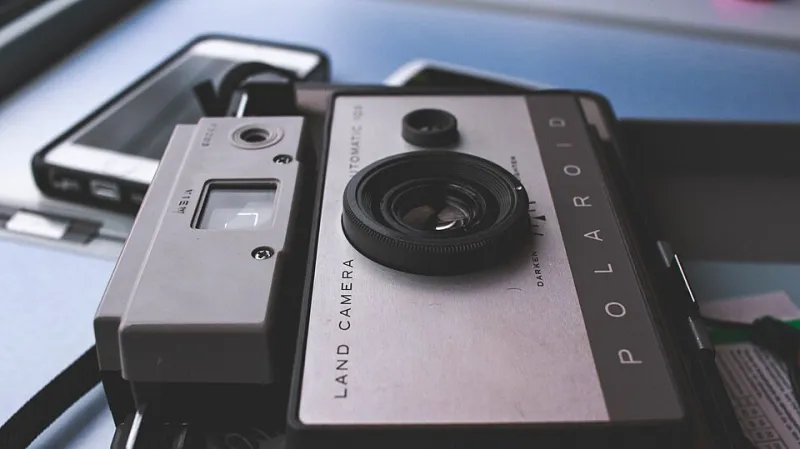
Photo: Austin Prock prock, CC0, via Wikimedia Commons
There's a moment at almost every house party these days that would have looked completely unremarkable in 1987 but feels quietly revolutionary right now. Someone pulls a chunky little camera out of their bag, holds it up, and — whirr, click, whirr — out slides a small white rectangle that slowly, magically, becomes a photograph. People crowd around it. They hold it carefully. Someone inevitably waves it in the air even though we all know that doesn't actually help.
Instant film is back. Not as a novelty, not as a gimmick — as a genuine cultural moment. And if you've been wondering why your Instagram feed is suddenly full of washed-out, slightly overexposed snapshots with white borders, you're not imagining things.
The Revenge of the Imperfect Photo
Let's be honest about where we've been. The past decade of smartphone photography created something that should have been wonderful — unlimited, high-resolution, always-with-you cameras — but somewhere along the way it turned into an exhausting arms race of editing apps, lighting setups, and retakes. A casual birthday dinner became a twenty-minute production. A trip to the Grand Canyon meant spending half your time staring at a screen instead of at the canyon.
Something got lost in all that pixel-perfect pursuit. The ease. The spontaneity. The feeling that a photo was a moment rather than a project.
Polaroid cameras and their instant-film cousins — Fujifilm Instax, lomography cameras, and yes, even the humble disposable drugstore camera — offer a completely different deal. You get one shot. The lighting might be weird. Someone might be mid-blink. The colors will drift warm and dreamy in ways no filter can quite replicate. And when that little print comes out, it's yours. Physically, tangibly, irreversibly yours.
That trade-off, it turns out, is exactly what a lot of people have been craving.
Why Gen Z Is Leading the Charge Back to Analog
Here's the part that might surprise you: the loudest voices in the instant camera revival aren't nostalgic Gen Xers trying to relive their high school years. It's Gen Z — people who grew up with iPhones in their hands and have zero personal memory of the original Polaroid era — who are driving a huge chunk of this comeback.
Fujifilm reported that Instax camera sales have consistently grown year over year throughout the early 2020s, with younger consumers making up a significant share of buyers. Polaroid relaunched with new hardware and a whole new brand identity, and it found an audience that wasn't expecting one.
The appeal makes a weird kind of sense when you think about it. For a generation that has always had the ability to delete, filter, and endlessly revise their visual identity online, the inability to do those things feels almost rebellious. An instant photo can't be edited. It can't be deleted. It exists, imperfections and all, and it exists right now. In a world of infinite digital copies, there's something almost radical about a one-of-a-kind physical object.
The Party Effect
Nothing accelerated the instant camera comeback quite like its adoption as the unofficial social prop of choice at weddings, birthday parties, and holiday gatherings. Guest books with Polaroid strips. Photo booths stocked with Instax cameras. Bachelorette parties where everyone gets a disposable camera to carry around all night.
These aren't just cute ideas — they tap into something genuinely meaningful about how we want to remember big moments. A professionally edited wedding gallery is beautiful. But a slightly blurry Polaroid of your college roommate laughing so hard she's crying at the reception? That one lives on the refrigerator for years.
The physical print is doing a lot of emotional heavy lifting here. You can't scroll past it. You can't accidentally lose it in a camera roll of ten thousand other photos. It sits on a corkboard or gets tucked into a journal or gets mailed to someone, and every time you see it, you feel the moment it came from.
Holding a Memory in Your Hands
There's a tactile dimension to instant photography that digital images genuinely can't replicate, and it connects directly to why sites like this one exist in the first place. The good old days weren't just about what happened — they were about how things felt. The weight of a photo album. The slight chemical smell of fresh prints. The ritual of dropping off film at the drugstore and waiting, actually waiting, to see how your pictures turned out.
Instant cameras compress that ritual into about three minutes, but the feeling is remarkably similar. There's anticipation. There's the reveal. There's the slight lottery-ticket thrill of not knowing exactly what you're going to get.
For anyone who grew up taping Polaroids to their bedroom mirror or passing them back and forth in high school, the current revival hits like a warm wave of recognition. For younger people discovering it fresh, it's something they didn't know they were missing until they held that first little print in their hands.
The Imperfection Is the Point
Maybe the most interesting thing about where instant film has landed culturally is what it says about our relationship with authenticity. We spent years chasing the perfect photo, and a lot of us ended up feeling strangely disconnected from our own memories — like we'd documented everything and experienced nothing.
A Polaroid doesn't let you chase perfection. The grain, the light leaks, the slightly off-center framing — those aren't flaws to be corrected. They're proof that something real happened. That you were there, and you didn't spend the whole time fussing with angles and exposure settings.
There's a reason these little cameras keep showing up at the moments people care about most. They're not just a throwback aesthetic choice. They're a statement about what's worth keeping — not the polished version, but the real one.
And honestly? Our grandparents, shaking their Polaroids in rec rooms across America, probably could have told us that all along.