Combination Locks, Cheap Cologne, and the Unspoken Rules of the Locker Room We All Just Somehow Knew
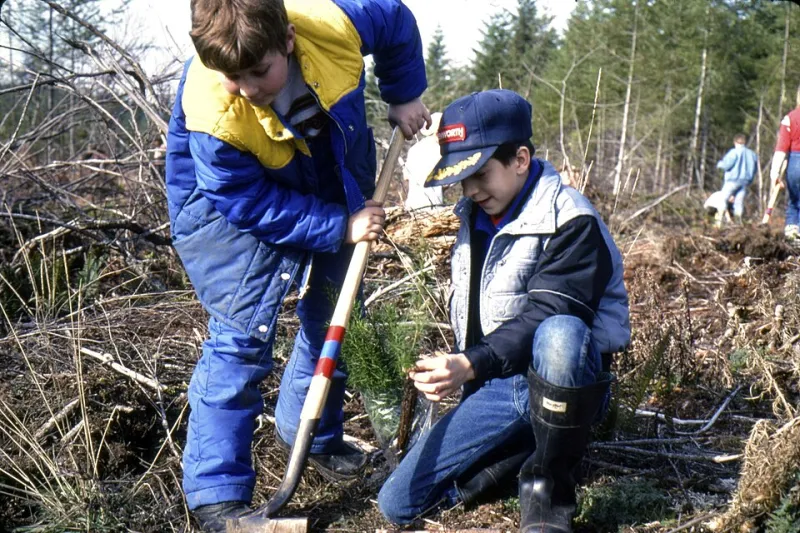
Photo: BLM Oregon & Washington, CC BY 2.0, via Wikimedia Commons
There are places that exist outside of time. Places where the rules of the regular world didn't quite apply, where hierarchy was established through means no adult could fully explain, and where an entire generation quietly figured out how to be human. For millions of American kids growing up in the '80s and '90s, that place was the middle school locker room.
It smelled like a science experiment gone wrong. It was loud in a way that felt almost violent. And yet — and this is the part that still catches us off guard — we kind of miss it.
The Smell Hits First, Always
Let's just go ahead and name it. The locker room had a smell. It wasn't one smell, exactly. It was a layered, living thing — mildew from gym towels that had been stuffed into lockers since Tuesday, the sharp chemical punch of Right Guard or whatever generic aerosol deodorant someone's mom bought in bulk, and underneath it all, the faint ghost of old sneakers that had logged a thousand laps on a linoleum floor.
Nobody talked about the smell. You just walked in, absorbed it, and got on with things. And somehow, decades later, one whiff of something even vaguely similar — a high school gym, a community center, a YMCA changing room — and you're twelve years old again, spinning your combination lock and hoping you remembered the sequence.
The Combination Lock Was a Daily Rite of Passage
Speak of the devil. Those locks. If you grew up in this era, you know the specific low-grade anxiety of standing at your locker before gym class, spinning left to 17, right past 17 to 32, left to 8, and then... nothing. The lock doesn't open. You try again. Still nothing. The bell is about to ring. Your palms are sweating. The combination that you've done a hundred times has completely abandoned your memory.
Coach is already blowing the whistle in the gym. You yank the lock in quiet desperation and — miracle of miracles — it pops open. Crisis averted. You exhale. Nobody saw that.
Except everyone saw that, and nobody said a word, because everyone had their own version of that exact moment at least once a week.
The Unwritten Codes Nobody Taught You
Here's what's fascinating about the locker room in retrospect: it had a fully functioning social contract, and not a single adult wrote it down. You just... absorbed it. You knew where to stand. You knew who had the invisible territorial claim on which bench. You knew that certain conversations happened in there and certain ones didn't. You knew the difference between the kind of teasing that was actually friendly and the kind that wasn't, even if you couldn't have articulated it at the time.
There was a whole unspoken curriculum happening alongside the official one, and gym class was where it got its final exam. Who could take a joke. Who couldn't. Who would have your back when something went sideways. Who wouldn't. You learned more about human nature in that tiled, echoing room than in most of your actual classes.
The Wet Towel: A Cultural Institution
Okay. We have to talk about the wet towel.
The physics of it were simple. The sociology of it was complex. A damp towel, snapped with the right wrist action, produced a sound like a firecracker and a sting that was mostly theatrical but occasionally very, very real. It was part warfare, part theater, and entirely the kind of thing that would generate a strongly worded email from a parent today.
And yet. There was something almost ritualistic about it. It had rules — unspoken ones again — about who could do it to whom, under what circumstances, and what the appropriate response was. Getting got meant you were in the mix. It meant you were seen. For a twelve-year-old trying to figure out where they fit, being in the mix was everything.
We're not saying it was sophisticated. We're saying it was real, and that realness — the physical, chaotic, entirely unmediated nature of it — is something the current generation of kids is navigating very differently.
Gym Class as Social Ecosystem
Peel back the dodgeballs and the rope climbs and what you really had in gym class was a petri dish for social development. The teams picked by captains in front of everyone — brutal, yes, but also clarifying in ways we're still processing. The relay races where the kid who dropped the baton had to live with it, briefly but publicly. The square dancing unit that nobody asked for but somehow everybody remembers.
These weren't just physical education moments. They were character-building exercises disguised as activities. You learned to lose gracefully (or not). You learned to win without being insufferable (or not). You learned that sometimes the kid who got picked last was actually the funniest person in the room and maybe that mattered more anyway.
The Locker Room After the Game
If regular gym class had a social ecosystem, the locker room after an actual game or match was something else entirely. Win or lose, something shifted in there. The adrenaline was still running. The coach's voice was still echoing. And for a few minutes, the usual social stratification kind of dissolved.
Kids who barely spoke in the hallway were high-fiving. Rivals were grudgingly nodding at each other. Someone was doing a terrible impression of the referee. Someone else was replaying the best moment of the game with increasingly exaggerated hand gestures. It was loud and sweaty and completely alive.
You don't really get that in the age of Zoom recaps and group chats. Some things require a physical room.
What We Actually Miss
Here's the honest answer: we don't miss the discomfort, exactly. We don't miss the anxiety of the combination lock or the sting of the towel or the very specific indignity of being picked last for kickball. What we miss is the texture of it. The unfiltered, unoptimized, sometimes uncomfortable reality of growing up in close proximity to other people.
Today's fitness culture is, in many ways, better. More privacy. More options. More sensitivity to the fact that not everyone thrives in the same environment. These are genuine improvements and we're not arguing otherwise.
But there's a version of growing up that happened in those loud, smelly, chaotic locker rooms that produced something — a kind of resilience, a kind of social fluency, a kind of shared memory — that's genuinely hard to replicate. Those were the good old days, weird smells and all.
Somewhere, there's a combination lock that still remembers your sequence. Left to 17, right to 32, left to 8. Try it. See if it still opens.