Crepe Paper, Sweaty Palms, and the Slow Song That Changed Everything: A Field Guide to the School Dance
There's a particular kind of nervous energy that belongs exclusively to being thirteen years old and standing near the bleachers while a DJ in a polo shirt cues up "I Will Always Love You" for the third time in an evening. Your sneakers squeak on the gym floor. Someone nearby smells overwhelmingly of their older sibling's cologne. The crepe paper streamers taped to the basketball hoop are already half-falling down, and the punch — bright red, aggressively sweet — is being suspiciously guarded by a math teacher who clearly drew the short straw.
This was the school dance. And honestly? It was kind of perfect.
The Gymnasium, Transformed
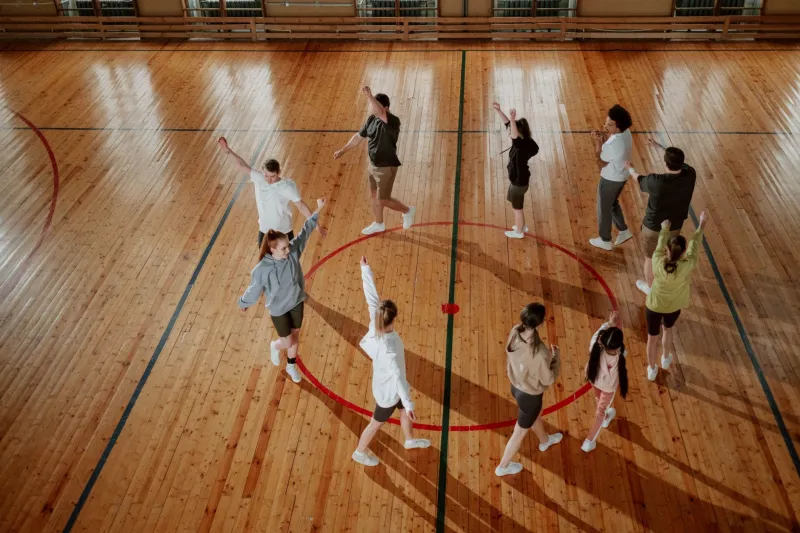
There's something almost theatrical about what a school gym became on dance night. Monday through Friday it was the site of failed rope climbs and the indignity of dodgeball. But come Friday evening, someone's parent committee had gone absolutely to town with streamers, balloons, and those little twinkle lights that made everything look like a low-budget prom scene from a John Hughes movie. Which is exactly what it was, and exactly why it worked.
The transformation mattered. It told you, without words, that tonight was different. Tonight, the rules were slightly suspended. Tonight, something could happen. That sense of possibility — manufactured and a little clunky as it was — was genuinely electric. You walked through those gym doors and you felt it in your chest before you even heard the bass drop on whatever pop-rap crossover was dominating the radio that fall.
The Chaperones: Unsung Architects of the Whole Thing
Let's give credit where it's absolutely due. The chaperones — a rotating cast of parent volunteers and visibly reluctant teachers — were doing something more sophisticated than just making sure nobody snuck outside. They were holding the whole social container together.
They stood at the edges of the room with that particular expression: alert but trying not to look alert. They separated the couples who were dancing too close (the classic "leave room for the Holy Spirit" intervention, delivered with varying degrees of awkwardness depending on the teacher). They quietly made sure the kid standing alone by the snack table got checked on. They were the guardrails on a road that felt, to everyone on it, like a genuine adventure.
In retrospect, the whole evening was this beautifully engineered balance between freedom and structure. Enough freedom that it felt real. Enough structure that nobody completely fell apart. Most of us didn't appreciate that calibration until we were well into adulthood.
The Slow Song Situation
If the school dance was a play, the slow song was the third act. Everything built toward it. The fast songs were cover — a way to exist in the room, to move around, to look like you were having fun while actually conducting a series of rapid social calculations. Who was here? Who was dancing with who? Was there still a chance?
And then the DJ — bless him, whoever he was — would slow it down. The opening notes of something by Boyz II Men or Savage Garden or, in a certain era, Celine Dion would drift out of the speakers, and the entire gymnasium would shift. Some people grabbed their person immediately, the ones who had pre-arranged this moment in hushed conversations at their lockers all week. Others scrambled. Others retreated to the bathroom with military precision.
But some people — and maybe you were one of them, and maybe this memory is still sitting somewhere warm in the back of your chest — walked across that floor and asked. And someone said yes. And you put your hands in approximately the right places and swayed slightly off-rhythm and tried very hard not to step on anyone's feet, and for three and a half minutes, the entire universe was exactly that small and exactly that enormous all at once.
No app has ever replicated that specific feeling. Not one.
The Social Hierarchy, Live and In Person
Here's the thing nobody said out loud but everyone understood: the school dance was also a live, real-time map of every social dynamic in the building. Who danced with who. Who got asked. Who asked and got turned down and then had to figure out what to do with their face for the rest of the evening. Who showed up in a group and stayed in that group like a protective formation all night.
It sounds a little brutal in summary, and parts of it were. But it was also the first place a lot of us learned to read a room, to take a social risk, to recover from embarrassment, and to feel genuine empathy for someone else going through the same gauntlet. The school dance didn't have a curriculum, but it was absolutely teaching something.
The kids who navigated it with some grace — not necessarily the popular ones, but the ones who were kind and present and didn't make anyone feel worse for being there — those were the ones you remembered. Those were the ones who were actually winning something that mattered.
The Details That Made It
Ask anyone about their school dance memories and they don't lead with the big moments. They lead with the details. The specific song that came on right when something important happened. The color of the streamers. The way the gym smelled — and yes, it always smelled like a combination of floor wax, punch, and the collective anxiety of two hundred adolescents, and somehow that scent is attached to something that feels like home.
The photo booth in the corner, if you were lucky enough to have one. The friend who wore something wildly unexpected and became briefly legendary for it. The teacher who actually danced, bless their heart. The moment right before you left when you stood outside in the cool night air and felt like something had shifted, even if you couldn't name what.
These weren't small things. They were the texture of growing up.
Why We're Still Talking About It
The school dance occupies this specific, irreplaceable spot in the American coming-of-age story because it was one of the first times we were handed a real social situation and asked to figure it out ourselves — mostly. It was low-stakes enough that surviving it was possible, and high-stakes enough that it genuinely felt like it mattered.
And it did matter. Those nervous walks across a gym floor, those sweaty-palmed slow dances, those huddles with your best friends analyzing every possible meaning of a single glance from across the room — they were the early drafts of how we learned to be with other people.
So yeah, the decorations were a little sad. The music was sometimes questionable. The punch was definitely not worth the paper cup it came in. But those evenings? Those evenings were something. And if you close your eyes and let yourself go back there for just a second, you'll probably find that some part of you never really left.