The Backseat Was the Destination: Why the No-Screen Road Trip Made Us Better Company
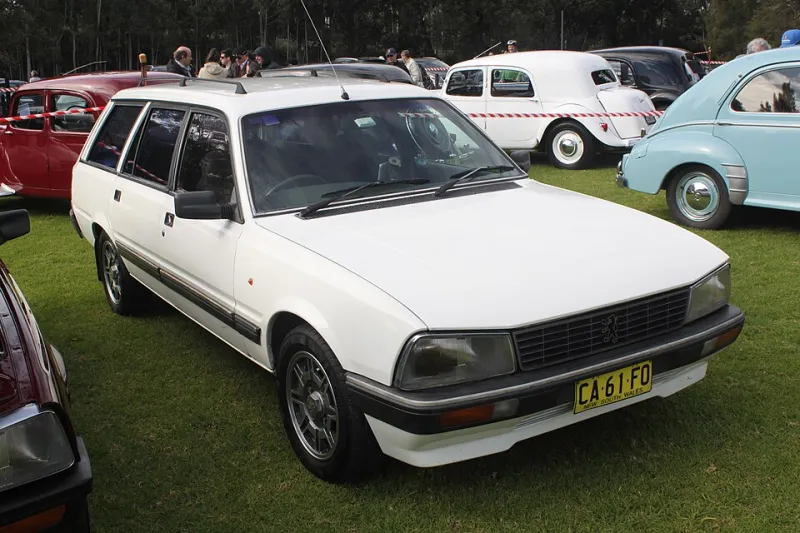
Photo: Jeremy from Sydney, Australia, CC BY 2.0, via Wikimedia Commons
The family road trip used to be a test of character. Not because the drive was dangerous, but because you had nothing to do but sit there and be with your family. No tablet. No streaming. No group chat. Just a cooler, a map, and a backseat you'd be sharing with someone who had very strong opinions about elbow room.
We have spent the last decade optimizing the road trip. Screens. Headphones. Individual entertainment. And look, I get it. A quiet car is a gift. But I think we lost something when we replaced the backseat with a personal theater. We lost the boredom. We lost the negotiations. We lost the weird, wonderful culture that only grows when people are stuck together and have no choice but to deal with it.
The TripTik Was the Family Bible
If you grew up in the 1980s or 1990s, you knew the AAA TripTik. It was a flip book of maps, custom-printed for your route, with a highlighted line that told you exactly where to turn. Your parent kept it in the glove compartment like a passport. There was no GPS voice telling you to recalculate. There was only your dad saying 'I think it's the next exit,' and your mom saying 'I don't think it is,' and the TripTik being right or wrong.
The TripTik taught you that the journey was a plan. It had pages. It had a beginning and an end. It was not a search result. It was a document. And when you were in the backseat, you could look over the seat and see the route, which was a kind of power.
The Cooler Was a Gamble
The cooler was a physics experiment and a family gamble. Sandwiches wrapped in foil. A bag of baby carrots. Juice boxes that had been squished by a gallon of water. A questionable yogurt. You ate what was there because there was no drive-thru for the first two hours, and by hour three, you were hungry enough to eat a warm cheese stick.
The cooler was also a symbol of preparation. Someone had thought ahead. Someone had made sandwiches at 7 a.m. The cooler said: we are a family that plans. We are a family that saves money. We are a family that will be eating soggy turkey on wheat at a rest stop while other families buy chicken nuggets.
License Plates and Other Small Religions
The license plate game was our first introduction to geography as a competitive sport. You saw a plate from Utah and yelled 'Utah!' like you'd won a medal. You saw a plate from Hawaii and felt like you'd spotted a unicorn. You saw a plate from your own state and didn't bother. You kept a tally on a napkin.
Then there was the alphabet game, where you looked for letters on road signs. The punch buggy game, which was less a game and more a legal excuse to hit your sibling. The quiet game, which was never quiet. The 'I spy' game, which always devolved into arguments about whether a tree counts as a thing.
These games were not just distractions. They were the culture of the backseat. They were the way you passed time without a screen. They were the way you learned to pay attention to the world outside the window, even when the world outside the window was a cornfield.
The Divider Was a Border Wall
If you had a station wagon, you probably had a backseat divider. It was a flimsy plastic barrier that was supposed to keep siblings from touching each other. It never worked. But it created a border. It created a line. It created a whole set of rules about what was on whose side.
The divider was where you staged your stuff: a book, a Walkman, a bag of crackers. It was where you put your elbow when you wanted to annoy someone. It was where you leaned when you were tired. It was a monument to the idea that shared space can be divided, even if it can't.
Boredom Was the Curriculum
The thing about a no-screen road trip is that you had to be bored. Real boredom. The kind where you stare at the dashboard and think about your life. The kind where you have the same conversation with your sister for the fourth time because there is nothing else to do. The kind where you invent a game out of a piece of string and a button.
Boredom was the curriculum. It taught you patience. It taught you creativity. It taught you how to sit with other people and not be entertained every second. It taught you that family is not a series of activities but a group of people who are stuck together, and that stuck-togetherness is not always comfortable, but it is often funny.
What the Tablet Cannot Do
A tablet can keep a kid quiet. It can play a movie. It can offer a game with bright colors and a reward loop. It cannot teach you how to negotiate elbow room. It cannot teach you how to share a bag of crackers with someone you're mad at. It cannot create a memory out of a wrong turn and a diner you found by accident. It cannot make you laugh at a joke that only your family understands.
The tablet is a tool. It is not a culture. The backseat was a culture. It had rituals. It had conflicts. It had a language. It had the shared experience of being bored together, which is one of the most underrated forms of intimacy.
The Long Way Home
I am not suggesting we throw away the tablets and drive to Florida with a paper map. I am suggesting we remember what the road trip was before we optimized it. It was slow. It was sticky. It was loud. It was ours.
The backseat was the destination. The destination was just where you got out. And if you were lucky, you got out with a new inside joke, a new game, and a story you'd tell for the rest of your life. That's not a screen. That's a family.