Meet Me at the Food Court: The Saturday the Mall Was Our Whole Internet
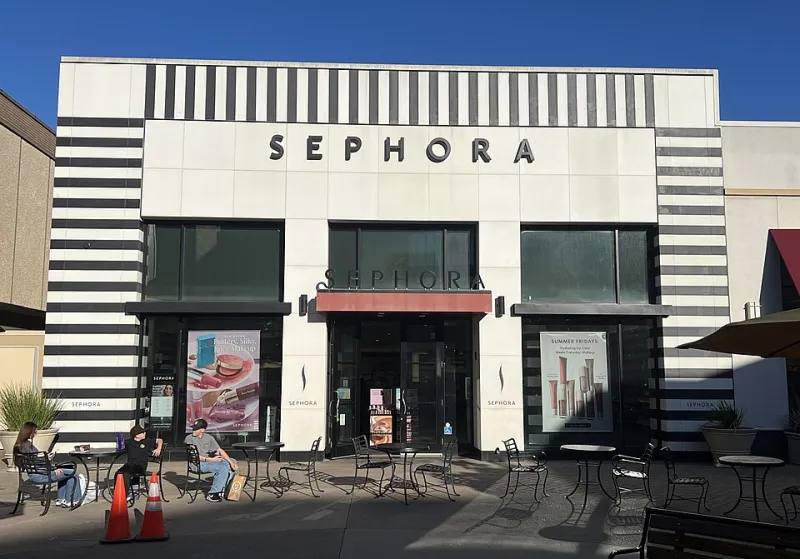
Photo: TaurusEmerald, CC BY-SA 4.0, via Wikimedia Commons
The drop-off was the same every time. A parent's car pulled up to the entrance closest to the anchor store, you said thanks, and the door shut behind you with a sound that felt like a small release. Then you were inside, under the skylights, standing on that shiny tile that squeaked under sneakers, and you had four hours to fill and absolutely no plan.
That was the entire point.
The Map Kiosk Was Our Search Bar
Every mall had one near a main entrance: a backlit directory with a red arrow and the words You Are Here. You stood in front of it even when you knew exactly where you were going, because standing there was part of the ritual. Somebody in the group always traced a finger down the list of stores and said the name out loud, as if saying it out loud was the same as making a decision.
That kiosk did everything a phone does now, minus the phone. It told you where you stood, what was nearby, and which escalator would get you to the level with the good store on it.
Anchor Stores and the Gravity of the Place
The department stores at each end did the heavy lifting. They gave the mall its shape and gave us its weather system — the perfume counter downstairs, the housewares floor with the carpet and the quiet, the escalator that hummed its one long note. You could spend twenty minutes in an anchor store and buy nothing, and nobody working there thought that was strange. That was just what the building was for.
The Food Court Was a Cafeteria With No Adults in Charge
There were the orange chicken samples on toothpicks. There was the cinnamon place whose smell reached three storefronts in every direction. There was the neon sign shaped like a smoothie cup and the seating area with the round tables bolted to the floor and the wobbly chairs that only wobbled in one direction if you sat just right.
You staked out a table the way you would claim a seat in a cafeteria, except here nobody took attendance. The food court is where the actual social negotiation happened. Who was sitting with whom. Who showed up late. Who had cash and who had to borrow five dollars and who was good for it.
Sam Goody, Waldenbooks, and the Art of Killing an Hour
The record store and the bookstore were the two places you could disappear without anyone worrying. In the bookstore you sat on the floor with a magazine and read it cover to cover, then put it back on the rack, feeling mildly criminal and entirely justified. In the record store you flipped through the listening stations and the long bins of CDs, pretending to be considering a purchase you had already made up your mind about three weeks ago.
The Escalator Was Free Entertainment
The escalator held everything up. You rode it up, then down, then up again, because there was nothing at the top you needed and nothing at the bottom you needed either. The glass elevator on the outside of the building was a tourist attraction. The escalator was public transportation for people with nowhere to be.
The Bench Economy
There was always a bench, usually near a planter, usually with a couple of guys in it who were clearly waiting for someone. Sitting on that bench was a statement. You were visible. You were locatable. If someone was looking for you, this is where they would find you, and the whole point of the afternoon was to be findable.
What We Were Actually Practicing
Here is the thing we did not know at the time: the mall was a training ground. Small negotiations, in cash, with strangers. Deciding how to spend eleven dollars so it lasted until pickup. Figuring out that a shop clerk would leave you alone if you looked purposeful. Learning how to be bored in public and handle it gracefully, which is a skill no one teaches anymore because no one is ever bored in public now.
The Smell Test
We can still smell it. Warm pretzels and vanilla candle wax and that faint chemical chill near the entrance doors. Catch that combination anywhere today — an airport concourse, a casino walkway, a dying mall two exits past the good ones — and you are fourteen again, and your ride does not come for another hour and a half, and that is exactly what you want.
Where the Map Ended
The walk always finished in the same place it began. Back to the entrance near the anchor store, back under the skylights as they dimmed, back to the glass doors to watch for headlights. Nobody had done anything. Nobody had purchased anything meaningful. And yet you got in the car with the specific tired satisfaction of a day fully used up — which, when you think about it, is a thing a phone has never once given back to us.