The Percolator Knew Before We Did: Remembering When the Kitchen Talked Back
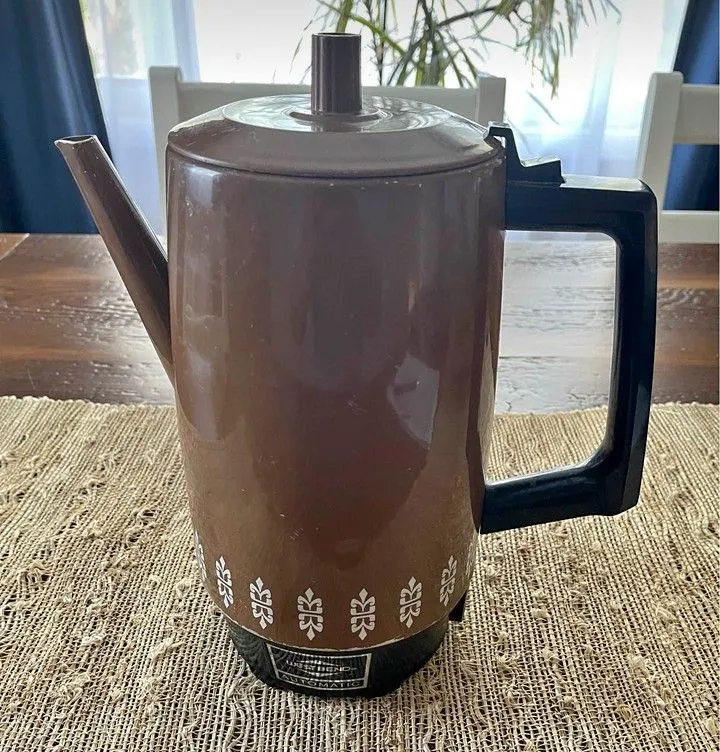
Photo: vintage 1970s kitchen refrigerator retro percolator, via i.pinimg.com
Close your eyes for a second and listen. Not to your phone, not to the TV in the other room — to the memory underneath all of that. There's a good chance it sounds like a kitchen.
Not a kitchen from a magazine. Your kitchen. The one with the linoleum that had a pattern nobody chose on purpose, the fluorescent light that buzzed just slightly out of tune, and the refrigerator that hummed so constantly you forgot it was there — until the power went out one night and the silence was deafening.
The Morning Report, Delivered by Coffee
If you grew up in a house with a stovetop percolator, you know that coffee didn't just get made. It announced itself. That rhythmic bloop-bloop-bloop was the sound of the day officially beginning, a little metronome keeping time while Mom read the funnies or Dad waited for the weather report on the six o'clock news the night before to be proven right.
Then came the smell — and let's be honest, half of us who "don't like coffee" still love the smell of it, because the smell means somebody was up, somebody was home, and the day hadn't started demanding things from you yet.
Later came the drip machine with the little burner plate, and later still, the microwave's unceremonious beep. But the percolator era had texture. It had personality.
The Ice Tray: America's First Stress Toy
Here's a sound that deserves its own exhibit in the Smithsonian: the crack of an aluminum ice tray being twisted loose. That sharp, satisfying snap followed by the rattle of cubes into the bin. If you were the kid assigned to fill the trays, you know the other half of the ritual — the careful walk back to the freezer, the trays tilted like a waiter carrying soup.
And if you were really lucky, you grew up with the plastic trays with the lever handle, and you pulled that lever like you were operating heavy machinery. Nobody teaches kids these things anymore because, frankly, nobody has to. The ice comes from a door in the fridge now, pre-crushed, pre-automated, pre-magic.
The Hum That Meant Everything Was Fine
The refrigerator hum deserves more credit than it gets. It was the white noise of childhood. You fell asleep to it during hot summers when the window unit was fighting a losing battle. You stood in front of its light at midnight, eating leftover meatloaf with your hand cupped under your chin like a raccoon.
That hum was a heartbeat. It meant the milk was cold, the leftovers were safe, and the household was running. Modern fridges are quieter, more efficient, and completely forgettable. Our grandparents' fridges — those rounded, pastel, handle-like-a-car-door monsters — had presence. You didn't just store food in them. You hung your report card on them, held up by a magnet from a road trip you barely remembered.
The Table Was the Internet
Here's the thing about the kitchen of the good old days: it was the only place with all the information. Who was mad at whom. What was happening at work. Whether Grandma's test results came back. Whether you were grounded.
The kitchen table was the group chat, the news feed, and the comment section — except the comments came with meatloaf, and somebody would smack you with a dish towel if you were out of line. Moderation, the old-fashioned way.
When screens finally migrated into other rooms, the kitchen held out longer than most. It was the last screen-free zone, mostly because the counter space was taken up by a rotary phone with a twenty-foot cord that stretched around the corner so you could have some privacy. (Privacy, in this context, meaning your family could still hear every word but couldn't see your face.)
Who Were You at That Table?
Maybe you were the kid who did homework there while the evening news muttered in the background. Maybe you were the teenager who grabbed a plate and ate in your room, thinking you were getting away with something. Maybe you were the one who stayed after dinner, helping with dishes not out of virtue but because the kitchen was where the good stories got told once the grown-ups relaxed.
Whoever you were, the sounds were the same. The clatter of forks on plates that didn't match. The screen door slapping shut. The hum, always the hum.
We can't go back — that's the whole point of this site, and the whole ache of it. But the next time you hear a sound that stops you in your tracks, a gurgle or a rattle or a hum that doesn't belong to now, let it. Stand there a second. The kitchen's still talking. It's just talking about the past.
And honestly? It's saying you were there. It's saying it mattered.