Chase the Chime: The Ice Cream Truck and the Small-Bill Economy of Summer
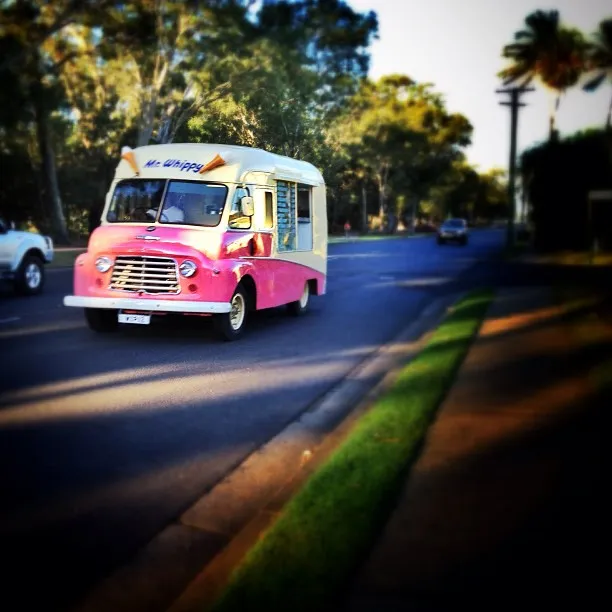
Photo: Robby Staff, CC BY-SA 3.0, via Wikimedia Commons
Some sounds arrive before you can name them. A screen door slapping shut. A lawn mower coughing to life. And then, cutting through a July afternoon like a promise, that tinny little melody — maybe 'Turkey in the Straw,' maybe something that sounded like a music box falling down stairs — drifting from three blocks away.
You didn't need a calendar. You needed a quarter. And maybe a friend with a quarter.
The Sound Before the Sound
The ice cream truck announced itself in stages. First came the rumor: a kid on a bike, a distant chime, a neighbor's dog losing its mind. Then the volume climbed, and the whole street reorganized itself. Screen doors banged. Training wheels screeched. Somebody's older brother pretended he wasn't running. Grown-ups appeared on porches with wallets, doing that slow, dignified walk that said, I am not excited, I am merely the holder of the purse strings.
The truck itself was a rolling monument to bad signage and good intentions. A white box with a decal of a cartoon cone. A menu taped to the side, sun-faded and peeling. A driver who had seen everything and was not impressed by your indecision.
A Rolling Economy Built on Coins
This was our first real market. Not the grocery store, where a parent handled the transaction, but the curb, where you were the customer. The currency was small: quarters, dimes, nickels, the occasional penny that you tried to pass off with confidence. The pricing was unforgiving. The SpongeBob popsicle with the gumball eyes cost more than the plain one. The Choco Taco was a luxury good. The Bomb Pop was the people's choice — three colors, one stick, blue tongue for the rest of the afternoon.
And every kid learned the same brutal lesson: desire does not equal budget. You stood there with $1.25 and a dream. You did math in your head. You considered pooling resources with a sibling, which meant negotiating a split that would later be renegotiated. You asked the driver if he had change for a five, and he looked at you like you had asked for a mortgage.
There was also the delicate art of asking a parent. The answer was never a simple yes. It was 'not today,' or 'didn't we just do this last week,' or 'go check the coin jar.' The coin jar was the family bank, and it was always lighter than you remembered.
The Menu Was a Museum of Small Pleasures
The menu board was a museum. Push-Up pops. Orange Creamsicles. The strawberry shortcake bar that left a waxy film on your teeth. The ice cream sandwich that was mostly air and wafer. The gumball machine at the back, where a nickel bought you a piece of gum with the shelf life of a geological era.
You didn't just buy a treat. You bought a ritual. You stood in line behind the kid who took ten minutes to decide. You watched the driver open the freezer and a puff of cold air rolled out like fog. You held the cold wrapper until your fingers went numb. You ate it too fast and got a headache. You did it again the next week.
When the Street Became a Block Party
The best part wasn't the ice cream. It was the sudden, spontaneous gathering. For five minutes, the street was a community. Kids you'd never spoken to became co-conspirators. A dad told a joke. A mom warned you not to ruin your dinner. The driver knew the regulars and maybe their orders, and if he didn't, he knew enough to ask.
That rolling song was a cue for everyone to step outside at once. It didn't matter if you had money. You could still stand there, evaluate the options, and pretend you were going to buy something. You could still feel the thrill of the chase. The truck was a moving campfire, and the neighborhood was the circle around it.
What We Were Really Paying For
Looking back, the ice cream was never the point. Or it was, but only partly. The point was the anticipation. The point was the sprint. The point was the little economy of coins and negotiations, the way a small purchase could feel like a decision. The point was the sound of the street waking up.
Today you can order a milkshake from your phone and have it arrive without ever hearing a chime or seeing a neighbor. Convenient, sure. But it won't make the screen door slam. It won't make the whole block run outside at once. It won't teach you that a quarter can buy happiness — or at least a Bomb Pop — if you're willing to chase it down.
Good old days? Maybe. But the real magic was that they were happening right then, on a Tuesday, in the heat, with a pocket full of change.