Pencil Circles and Lunch Money: The School Book Fair as Our First Big Spree
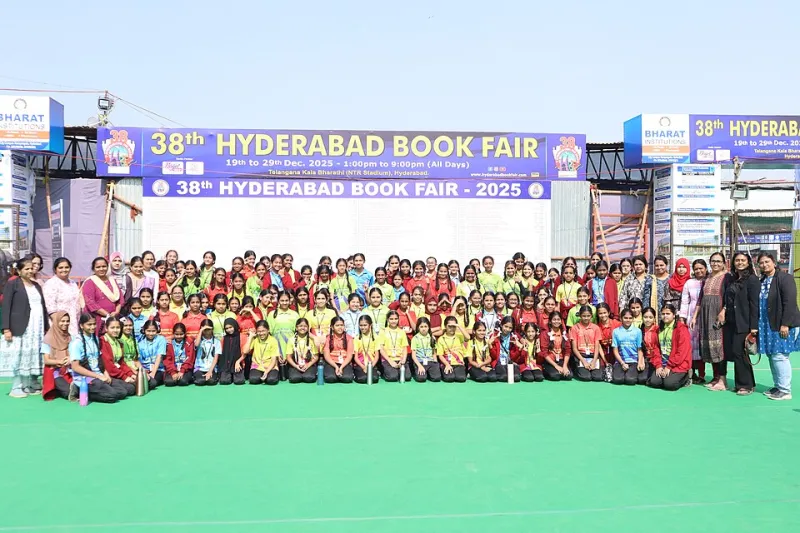
Photo: Batthini Vinay Kumar Goud, CC0, via Wikimedia Commons
On a normal Tuesday, the school library smelled like paste and old paper. Then the cases arrived — two or three of them, plastic and promising, wheeled in on a dolly while a teacher said 'don't touch' in a voice that meant 'please touch.' For one week, that room became the most important place on earth. The book fair was not a fundraiser. It was a holiday.
The Case That Held Everything
You know the cases. They unfolded like a tiny department store. Rows of paperbacks with shiny covers. A shelf of Guinness World Records books, thick as bricks, the covers always showing something impossible: the world's longest fingernails, the oldest cat, a man covered in bees. A spinner rack of bookmarks. A basket of erasers shaped like hamburgers, which is the most 1990s sentence I can write.
There were posters, too, rolled up in a bin like wrapping paper. Posters of cats. Posters of space. Posters with sayings that seemed profound when you were nine and embarrassing when you were twelve. You never bought the poster. Or you did, once, and your mom said 'where are you going to put that?' and she was right.
The Wish List Was a Budget
The wish list was a sheet of paper with a grid. You wrote down every title you wanted and every price next to it. You circled. You recalculated. You looked at the total and felt the first real pang of consumer math.
This was our first lesson in budgeting. Not the abstract kind, with worksheets and word problems, but the real kind. You had a certain amount of money — some from a parent, some from your own secret stash, some from a grandparent who slipped you a five and said 'don't tell your mother.' You had to decide. The hardcover was $12.99. The paperback was $5.99. The poster was $6.99, which felt outrageous. The hamburger eraser was $1.50, which felt reasonable. The eraser could be a gift. The poster was a dream.
The Non-Book Economy
The book fair was technically about books. Nobody was fooled. There was a non-book economy running alongside, and it was thriving. The erasers. The pencils with weird toppers. The little clip-on reading lights. The bookmark that was also a ruler. The tiny diary with a lock, which came with two keys, both of which you would lose by Friday.
The Guinness records book was the closest thing to a status symbol. You didn't read every page. You read the weird pages. You memorized a fact about the tallest man and repeated it at lunch. You passed the book around like a relic.
The Register Was the Finish Line
The day you shopped was not the first day. The first day was for browsing. The second day was for revising the wish list. The third day was for making your move. You stood in line with a pencil case and a paperback and a hamburger eraser, and you felt like an adult. You handed over your bills. You got change. You put the change in your pocket and immediately thought about what else you could buy.
And there was always the kid who bought nothing. Maybe the money wasn't there. Maybe they just liked being in the room. The fair was democratic in that way: everyone got to look, and looking was almost as good as buying. Almost.
The Poster You Never Bought
The poster is the perfect symbol of the book fair. You wanted it. You didn't buy it. You looked at it every day for a week, imagining it on your wall. You calculated the cost against the books you'd already picked. You decided it was too much. And then the fair left, and the poster went with it, and you never saw it again.
That's not a sad story. It's a lesson. The poster taught you that desire and budget are different things. It taught you that you can want something and not get it and still be fine. It taught you the particular ache of a missed opportunity, which is a feeling you'll need later in life, when you're looking at a used record store or a vintage store or a house you can't afford.
The Holiday Feeling
The book fair felt like a holiday because it broke the rules. You were allowed to shop during school. You were allowed to want things. The librarian smiled. The cases glowed. There was a table with a sign-up sheet for the book fair committee, which meant moms would be there, which meant there might be cookies.
It was our first taste of consumer desire, and our first taste of financial planning. It was a rare school event that felt like a celebration. And it was a reminder that a library can be a place of wonder, especially when it's full of things you can't afford and things you can.
Now, as adults, we have credit cards and online carts and next-day delivery. We can buy the poster. But the poster was never the point. The point was the wanting, the planning, the pencil circles, the loose change, the walk to the school library on a morning that felt like a holiday. Good old days? You bet. And the eraser still smells like rubber and nostalgia.