That First Breath of Fresh Plastic: The Sacred Ritual of Tearing Into a Brand-New Action Figure
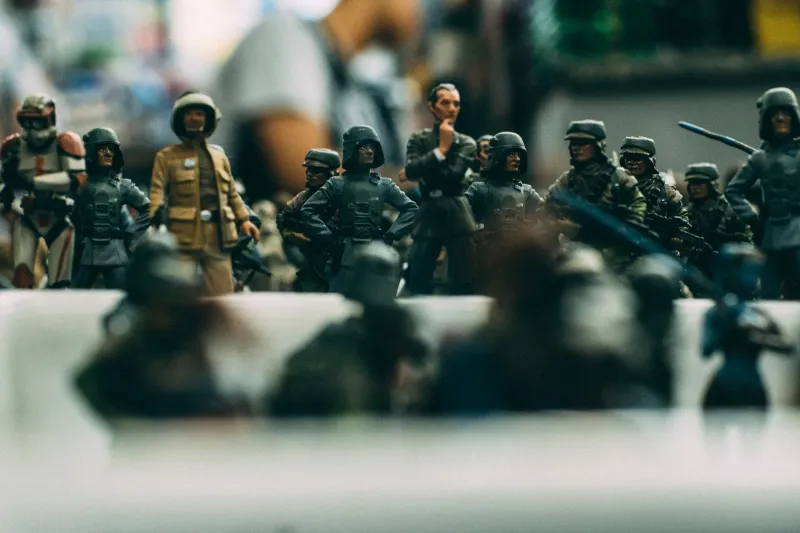
Somewhere between the toy aisle and the kitchen table, something transformed. A rectangle of cardboard and molded plastic — something that cost maybe six or seven dollars at Kmart or Toys "R" Us — became an experience so loaded with anticipation that your hands actually trembled a little. If you know, you know. And if you grew up anywhere in America between the late 1970s and the mid-1990s, you almost certainly know.
Opening a new action figure wasn't a transaction. It was a ceremony.
The Packaging Was Half the Point
Let's start where it always started: the card back. That vivid, usually slightly-too-bright artwork stretching behind the figure, showing your new toy in some dramatic pose — fist raised, weapon drawn, cape billowing in an imaginary wind. The bubble of clear plastic pressed tight against it, showing off the figure like a tiny museum exhibit. You could see it. You could almost touch it. But not yet.
The card back also had that grid of other figures in the line — the ones you didn't have yet, the ones you needed — each with a little checkbox or a number next to the name. That grid was basically a treasure map. A to-do list. A dare. Manufacturers like Kenner, Mattel, and Hasbro understood exactly what they were doing, and we walked right into it every single time with enormous, grateful smiles on our faces.
Some kids ripped the bubble off in one violent, joyful tear. Others — and maybe you were one of these — peeled slowly, carefully, almost reverently. Working a fingernail under the edge of the bubble where it met the card, trying to keep the whole thing intact. Not because you were planning to resell it. You were eight. You just somehow sensed that this moment deserved to be drawn out.
That Smell. You Know the One.
Once the bubble cracked open — and there was always a crack, a little pop of pressurized newness — the smell hit you. Fresh-molded plastic with a faint chemical sweetness underneath. Slightly waxy. Slightly industrial. One hundred percent intoxicating if you were a certain kind of kid.
Nobody talks about this enough. That smell was part of the ritual. It was the sensory signal that something new had arrived in your world, that the universe of whatever toy line you were obsessed with had just expanded by exactly one member. He-Man. G.I. Joe. Star Wars. Transformers. Masters of the Universe. The Teenage Mutant Ninja Turtles. Whoever it was, they were here now, and they smelled like potential.
Adults who collect vintage figures sealed in original packaging will tell you — with complete sincerity — that they can still recognize that smell decades later. It's a time machine built entirely out of polymer compounds and nostalgia.
The Weight of the Thing in Your Hand
Then came the figure itself. Lighter than you expected, maybe, or heavier depending on the line. The joints that clicked satisfyingly into position. The tiny accessory — a weapon, a helmet, a removable cape — that was almost guaranteed to get lost within 72 hours but felt absolutely precious in the first five minutes. You moved every limb. You checked every point of articulation. You held the figure up and squinted at it like a jeweler examining a diamond.
This was yours now. This specific one, with its specific paint applications and its specific little imperfections. The way the face was painted slightly off-center, or the way one knee joint was a little looser than the other. You noticed all of it. You catalogued it without meaning to.
And then — almost immediately — it became a toy. It got thrown into battle. It got dragged across carpet. It got left outside overnight and rained on. Because that was the other half of the deal. The ceremony ended and the adventure began.
Why We Kept the Packaging (Even Then)
Here's the thing that's interesting in retrospect: even as children, before anyone was talking about collectibles or resale value or mint-in-box condition, some of us kept the card backs. We didn't know why. We'd prop them up behind the figures on a shelf, or tuck them under a bed, or stack them in a shoebox in the closet. There was something about throwing away that artwork — that whole world illustrated on a piece of printed cardboard — that felt wrong.
Those instincts weren't wrong. They were early collector logic, operating in a kid-brain before the vocabulary existed to explain it. The packaging wasn't just packaging. It was context. It was the story the toy lived inside before it came home with you.
Today, the vintage action figure market is enormous and deeply serious. A sealed, first-release Star Wars figure in original Kenner packaging can sell for thousands of dollars. A carded Masters of the Universe figure in near-mint condition commands real money. And the people buying them aren't just investors — they're folks chasing something specific. Not just the toy. The whole experience. The sealed bubble. The card back artwork. The possibility of that smell when it finally opens.
Modern Unboxing Doesn't Quite Get There
Unboxing culture is massive right now. Millions of YouTube views, elaborate setups, ASMR microphones capturing every crinkle and tear. And some of it is genuinely fun to watch. But there's a reason so many of those videos feel like they're trying to recreate something rather than just doing something naturally.
The ritual of opening a vintage action figure worked because it was uncomplicated. There was no camera. There was no audience. There was just you and a thing you wanted, and the specific, unrepeatable moment of getting it. The stakes were low and the joy was enormous and nobody needed to perform it for anyone else.
That's a harder thing to manufacture than it looks.
The Good Old Days Were Right There in Your Hands
If you still have a few of those old figures — loose, paint worn, one arm replaced from a different figure entirely — you already know they're worth more than whatever price guide says. And if you happen to have one still in its original packaging, sitting in a box somewhere in a closet or an attic, you might want to go find it.
Not to sell it. Just to look at it. To remember the version of yourself who stood in a toy aisle with birthday money or allowance quarters burning a hole in your pocket, staring at that bubble of clear plastic like it contained the whole world.
Because honestly? It kind of did.