When There Was Nothing On, There Was Everything On: In Defense of the Seven-Channel Childhood
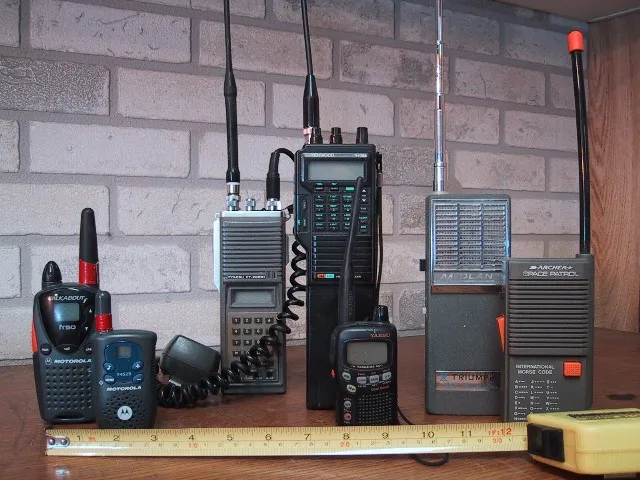
Photo: Wtshymanski at English Wikipedia, Public domain, via Wikimedia Commons
Let me make an argument that will sound unhinged to anyone under thirty: having almost nothing to watch was the best thing that ever happened to television.
I know how it sounds. We live in an age where a child can summon ten thousand hours of programming with a phrase spoken into a slab of glass. And yet somehow, everybody's bored. Everybody's scrolling. Everybody's watching nothing in particular and enjoying it less.
We had seven channels. Sometimes five, depending on the weather and how the antenna was feeling that day. And we were fine. Actually — and I say this with my whole chest — we were better than fine.
The Remote Was a Person Named Kevin
First, let's establish the physics of the situation. Changing the channel required effort. Either you walked to the television and turned a dial with a satisfying chunk, or you were the remote — the kid nominated to stand next to the set and flip through channels on command, like a human cursor.
This mattered. When switching costs something, you watch differently. You give a show four minutes instead of four seconds. You let a weird episode play out. You fall into things you'd never have chosen, and half the time, those accidental choices are the ones that stick with you forty years later.
I never sought out Gilligan's Island. It found me, on a Tuesday, because everything else was a commercial. And now it lives in my head rent-free, forever, alongside a theme song I can sing in full. That's not a bug. That's the system working.
Everybody Watched the Same Thing, and It Was Wonderful
Here's the part we truly lost, and I don't think we talk about it enough: the shared schedule.
When the finale of MAS*H aired, over a hundred million Americans watched it at the same time. Not on demand, not in chunks, not with different endings selected by an algorithm. Together. The next morning, the water cooler wasn't a metaphor — it was an actual water cooler, and everybody had seen the same thing and needed to talk about it.
Today we have a thousand shows and no shared moments. Your coworker is on season two, your sister bailed after episode three, and the conversation dies on the vine. Back then, culture had a heartbeat. It beat Thursday nights at 8, and you were either there or you were out of the loop, and being out of the loop was so uncomfortable that you showed up.
Boredom Was the Feature, Not the Bug
Now for the heretical part: the boring stretches were good for us.
When nothing was on — and I mean truly nothing, just static and test patterns and a public broadcasting pledge drive — you had to do something else. Read a book. Go outside. Call your friend on the landline and rehash the episode you just watched. Lie on the carpet and stare at the ceiling and, I don't know, think.
Boredom was the doorway to everything. It's how hobbies started, how imaginations got exercised, how kids ended up building forts and reading encyclopedias and drawing comics in the margins of notebooks. The seven-channel world had built-in empty space, and empty space is where a childhood actually happens.
Streaming has no empty space. It's a firehose. And we've discovered, somewhat sadly, that a firehose doesn't quench thirst — it just knocks you over.
The Case for Doing Nothing, Revisited
I'm not saying throw your smart TV into a lake. I'm saying we might want to steal back a little of what we had.
Pick one show and watch it with other people, in the same room, at the same time. Let an episode of something you'd never click on play all the way through. Resist the skip. Sit through the credits, for crying out loud — they used to be the law, and they were also kind of lovely.
The seven-channel world taught us that contentment isn't having everything available. It's being satisfied with what's in front of you. That's a lesson the algorithm never learned, because contentment doesn't click.
But we learned it. Channel 4, 9 o'clock, nothing else on. And you know what? We stayed.