Sixty-Four Squares of Light and Chemical Magic: Why Holding a Photo Feels Like an Act of Rebellion Now
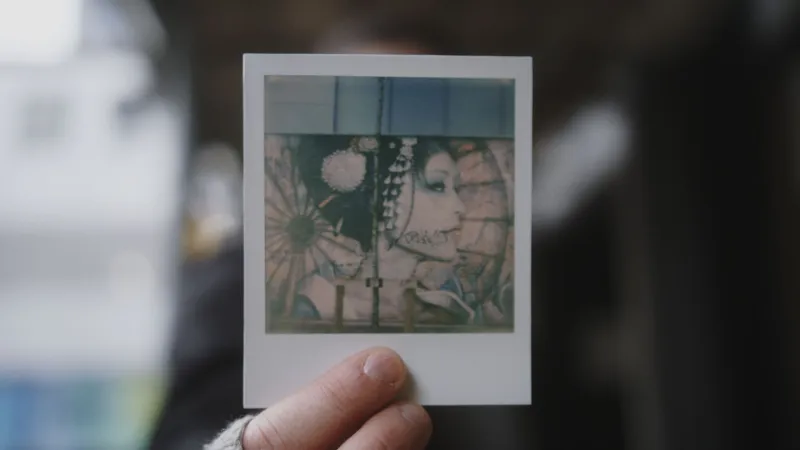
Open your camera roll right now. Go ahead. How many photos are in there? A thousand? Four thousand? Somewhere in the neighborhood of "I genuinely have no idea and I'm a little scared to find out"?
Now think about the last time you actually printed one.
For most of us, there's a gap there — a yawning, slightly embarrassing gap between the sheer volume of images we capture and the number of them that ever exist anywhere outside a glowing rectangle. We document everything and display almost nothing. We have more photographs than any generation in human history, and somehow, paradoxically, fewer memories we can actually hold.
Which is maybe — just maybe — why the Polaroid is back. And why it never really left.
The Camera That Always Knew Something We Forgot
Instant film photography has been having what the trend forecasters might call a "moment," except that moment has now stretched across the better part of a decade and shows no signs of stopping. Fujifilm's Instax line has become a genuine cultural fixture. Polaroid — the original, the icon, the camera your parents probably owned and definitely lost somewhere in a move — relaunched its classic format and found an audience that wasn't even born when the original company filed for bankruptcy the first time.
The buyers aren't who you might expect, either. Yes, there are the nostalgic Gen Xers recapturing something from their youth. But a huge chunk of the resurgent instant film market is millennials and Gen Z — people for whom analog photography was never really a primary experience. They didn't grow up waiting a week to see their vacation photos. They grew up with front-facing cameras and filters and the ability to take forty-seven versions of the same selfie before breakfast.
And yet here they are, spending real money on a format that gives you exactly one shot, develops in front of your eyes into something you absolutely cannot predict, and occasionally comes out looking like a fever dream rendered in chemicals and light.
They're not doing it despite those limitations. They're doing it because of them.
What Scarcity Does to Attention
There's a psychological shift that happens when you know you only have eight exposures left on a pack of film. Suddenly, you look at things differently. You wait for the right moment instead of machine-gunning through thirty versions of it. You consider the light. You think about who's in the frame and whether this is actually worth the cost of a shot — because yes, each frame costs actual money, and that fact alone changes your relationship to the image before you've even pressed the shutter.
This is not a new observation, but it keeps proving itself true: constraints create intention. When everything is infinite and free, nothing feels precious. When something is limited and costs something — money, attention, the irreversible chemical commitment of film — it becomes an event.
The photo you took on your phone at your cousin's wedding last summer is somewhere in a folder you haven't opened since. The Polaroid from that same wedding, the one where everyone's eyes are half-closed and your aunt is laughing so hard she's blurry, is stuck to someone's refrigerator with a magnet shaped like a pineapple. Which one is actually living?
The Beautiful Disaster of the Accidental Photo
Here's the thing that would have horrified your parents' generation: the bad photo has become desirable.
Double exposures that turn two moments into one strange, layered ghost image. Light leaks that wash the corner of a frame in gold or red for no reason except that the film was old or the camera wasn't quite sealed. The slightly underexposed shot taken at a birthday party where everyone looks like they're emerging from a warm fog. These used to be mistakes. Now they're aesthetic.
And there's something genuinely interesting in that reversal. We spent decades in pursuit of photographic perfection — sharper lenses, better sensors, computational photography that smooths skin and adjusts exposure and basically makes it impossible to take a truly bad picture. We got what we wanted. Every photo is technically competent. Almost none of them feel like anything.
The accident, it turns out, is where the feeling lives. The imperfection is the proof that something real happened, that real light hit real film in a real moment that cannot be reconstructed or retouched or re-shot. The blur is evidence of motion. The light leak is evidence of time. The slightly wrong color is evidence of a camera that was made in a factory thirty years ago and has its own particular way of seeing the world.
When a photo is perfect, it could have been taken by anyone, anywhere, anytime. When a photo is imperfect in exactly the right way, it could only have been taken by you, there, then.
The Album as Curation, Not Archive
Something else is happening alongside the instant film revival, and it's worth paying attention to: people are printing photos again. Not all their photos — that's the whole point. They're choosing. They're editing down twelve thousand images to the thirty or forty that actually deserve to be seen, that actually deserve to be touched.
Physical photo albums — the kind with plastic sleeves or sticky pages, the kind you have to actually sit down and look through — are showing up in craft stores and on wedding registries and in the hands of people who are tired of the idea that memory should live only in the cloud.
There's a different experience in flipping through a physical album versus scrolling a camera roll, and it's not just tactile, though the tactile part matters. It's the curation. Somebody made choices. Somebody decided these moments were worth preserving in a form that requires physical space and physical handling. The album is an argument: these things mattered. The camera roll is a landfill: these things happened.
Holding the Moment in Your Hand
Maybe what the Polaroid revival is really about — underneath the aesthetics and the nostalgia and the Instagram-friendly square format — is a hunger for something that feels real in a way that pixels don't quite manage.
A photograph you can hold is a photograph that exists in the same physical world you do. It can yellow. It can fade. It can get a coffee ring on the back from sitting on the kitchen table too long. It is, in every sense, mortal — and that mortality is exactly what makes it feel alive.
We have more images than we know what to do with, and we're drowning in them quietly, one forgotten camera roll at a time. The people shaking their Polaroids and waiting for the image to emerge aren't being irrational. They're being human. They want to hold the memory. They want it to be real.
They want to feel like the good old days are worth keeping.
That's not nostalgia. That's wisdom.