No Pause Button, No Rewind, No Mercy: What We Actually Left Behind When We Stopped Going to the Movies
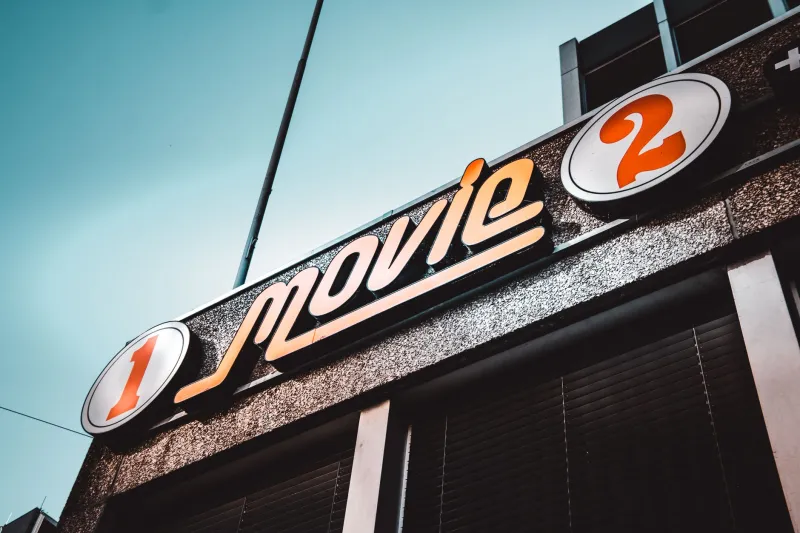
Let's be honest with each other for a second. You've done everything right. You've got the big TV — maybe even the projector screen you finally mounted after three weekends and one very tense trip to Home Depot. You've got the streaming subscriptions, the Dolby Atmos soundbar, the blankets, the couch cushions arranged just so. You even splurged on the good microwave popcorn, or maybe you broke out the actual stovetop kettle and felt genuinely proud of yourself.
And yet. You hit play, and something is missing. Not the picture quality. Not the sound. Something else — something harder to name, something that lives in the body more than the brain. The movie theater, for all its sticky floors and overpriced Icees, was giving us an experience that no amount of home improvement has ever fully replaced. And if we're being sentimental about it — which, honestly, is kind of our whole thing here — it's worth sitting with that loss for a minute.
The Ritual Started Long Before the Lights Went Down
Here's what people forget: the movie didn't start when the opening credits rolled. It started when you decided to go. There was something about the planning of it — checking the newspaper listings as a kid, or later the Fandango website that always seemed to crash at the worst possible moment — that built anticipation in a way that hitting a button on your remote simply cannot. You had to commit. You had to show up at a specific time, in a specific place, and once you were in that seat, you were in.
There was no pausing to check your phone (well, ideally). No wandering into the kitchen for a snack refill mid-scene. No dog to let out. The theater demanded a kind of full-body presence that we've mostly stopped asking of ourselves, and looking back, that surrender was actually a gift.
The drive there mattered too. Arguing about which theater had the best seats, debating whether to splurge on the large combo, pulling into that parking lot and already smelling the popcorn from outside the doors. By the time you handed over your ticket, you were already halfway into the experience.
That Smell Is Doing Something to Your Brain
Speaking of popcorn — let's talk about it, because it deserves its own moment. Movie theater popcorn doesn't taste like other popcorn. This is not a subjective opinion; this is just a fact that the entire American population has quietly agreed upon. It has something to do with the coconut oil some theaters still use, something to do with the industrial warmers keeping it at a temperature your microwave will never achieve, and something to do with the sheer volume of it — the way the smell hits you the second those lobby doors open and wraps around you like a greeting.
Scent is the most powerful memory trigger we have, and that particular combination — hot butter, warm sugar from the candy counter, a faint undercurrent of something almost industrial, almost electric — is burned into a specific part of a lot of our childhoods. One whiff of real movie theater popcorn and you're suddenly nine years old again, holding your parent's hand, absolutely convinced that whatever you're about to see is going to be the greatest thing you've ever witnessed.
You cannot bottle that. You cannot recreate it with a bag of Act II and a bowl on your coffee table. It just doesn't work.
The Dark Was Its Own Kind of Magic
There's a specific moment in every movie theater experience that doesn't get talked about enough: when the lights go all the way down. Not dim — down. That full, unanimous darkness that settles over a room full of strangers and somehow makes you all the same person for two hours.
At home, there's always some ambient light. A glow from the kitchen. A streetlight through the curtains. Your phone screen sitting face-up on the cushion like a little traitor. But in a theater, when the lights drop and that enormous rectangle of color fills your entire field of vision, your brain does something it almost never gets to do anymore: it fully lets go.
That darkness was permission. Permission to feel things — to laugh loudly, to cry without embarrassment, to gasp in unison with a room full of people you'd never spoken to and would never see again. The communal emotion of a packed theater is one of the genuinely underrated experiences of modern American life, and we started taking it for granted right around the time Netflix started asking if we were still watching.
The Trailers Were Part of the Deal
Ask anyone who grew up going to the movies regularly and they will tell you: the trailers were not an inconvenience. The trailers were part of it. There was a whole economy of anticipation built into those fifteen minutes before the feature — the thrill of seeing footage from something you hadn't heard of yet, the collective groan when a trailer gave away too much, the whispered arguments about whether that new one looked good or looked terrible.
At home, you skip them. Of course you do — they're right there, skippable, and we live in an era of ruthless efficiency. But something gets lost in that skipping. The trailers were a buffer, a transition zone between regular life and the world of the film. They gave your brain time to settle, to quiet down, to get ready. Without them, you're just suddenly in the middle of a movie, still half-thinking about whatever you were doing before you hit play.
What We Gained, What We Traded
None of this is to say that streaming is bad or that home viewing doesn't have its own real pleasures. It absolutely does. The comfort, the convenience, the ability to watch anything at any time in your pajamas with a glass of wine — these are genuine quality-of-life improvements, and we're not here to pretend otherwise.
But we traded something in that bargain, and it's okay to acknowledge it. We traded the ritual. We traded the commitment. We traded the particular magic of being in a room full of strangers who all chose the same story on the same night, all breathing the same buttery air, all disappearing into the dark together.
The good old days of the multiplex weren't really about the movies themselves. They were about what going to the movies meant — the getting there, the being there, the shared humanity of it. And that's the thing no home theater upgrade will ever fully give back.
Some experiences were never meant to be convenient. Some things are better when they cost you a little effort, a little planning, a little surrender. The movie theater understood that. And some part of us, scrolling through our queues on a Friday night, still does too.