Thirty Pounds of Homework and the Strange Freedom That Came With It
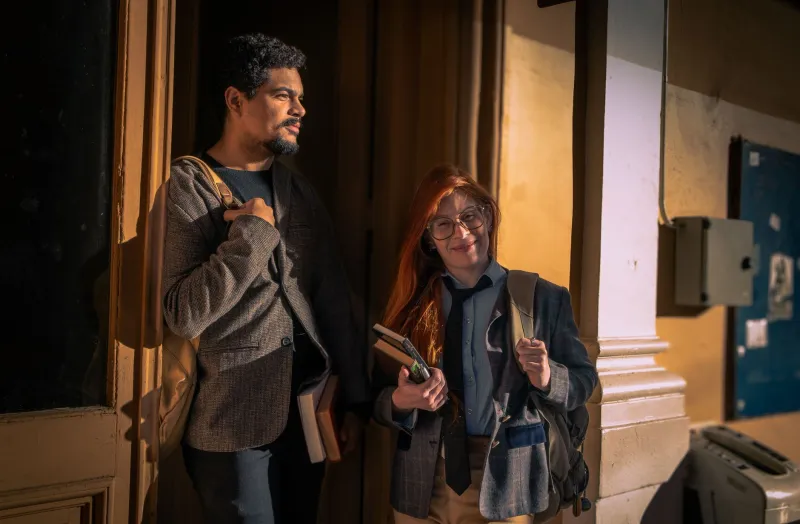
Somewhere around sixth grade, your backpack stopped being a bag and started being a personality. You had your patches, your keychains dangling off the zipper pull, maybe a band logo scrawled in ballpoint pen on the front pocket. And inside? An absolute disaster of spiral notebooks, crumpled permission slips, a gym shoe that somehow migrated from your locker, three mechanical pencils with no lead, and a math textbook the size of a small country. It weighed approximately the same as a golden retriever puppy, and you carried it everywhere.
And honestly? You kind of loved it.
The Heft Was the Point
Kids today roll up to school with a Chromebook in a slim sleeve and access to every textbook ever written through a browser tab. Which is, objectively, more practical. Nobody's arguing that. But there's something that got quietly lost in that trade-off — the physical weight of being a student.
When you lugged a backpack full of actual books, you felt educated. Or at least burdened in a way that rhymed with being educated. Each subject had its own spine-cracking tome. Earth science. American history. Pre-algebra. They had that specific institutional smell — a mix of old paper, industrial binding glue, and the faint ghost of every student who'd underlined the wrong passage before you. You'd flip open a borrowed textbook and find someone's doodles in the margins from three years back, a tiny cartoon or a mystery name written in bubble letters. It was like archaeology. Someone had been here. Someone had been bored in the exact same chapter.
The weight itself was a kind of ritual confirmation. Heavy bag meant a full day ahead. Heavy bag meant you were going somewhere that required preparation.
Locker Culture Was Its Own Civilization
Let's talk about lockers, because they deserve their own monument.
Your locker was your one square foot of personal real estate in a building that otherwise belonged to everyone else. You had a combination — three numbers you'd recite in your sleep — and you had exactly four minutes between classes to make it work. That little metal door swinging open was its own ceremony. Magnetic mirrors. Dry-erase boards for notes from your best friend. A photo strip from the mall booth tucked into the corner. Maybe a mini whiteboard calendar if you were the organized type, or just an avalanche of loose papers if you were the other kind.
Organizing your locker at the start of a new semester felt genuinely important. You'd stack your books in a specific order based on class schedule, figure out which notebooks went where, decide if this was the year you'd finally keep it clean. (It never was. By October it looked like a paper recycling bin in a windstorm.) But the intention was there. The ritual was there. You owned that space, and it owned you right back.
The Textbook as Time Capsule
School-issued textbooks were passed down like heirlooms — except nobody actually wanted them. They were covered in contact paper or grocery bags turned inside out, your name written in the front cover in permanent marker because the school needed to charge you if you lost it. The cover-your-book ritual at the start of every school year was its own weird communal experience. Everyone's mom had a slightly different technique. Some folded. Some taped. Some just handed you a paper bag and walked away.
But those books were objects. You dog-eared pages. You highlighted in yellow and then regretted it when you realized you'd highlighted the wrong sentence. You drew a mustache on a president's portrait and then felt vaguely guilty about it for two weeks. The physical interaction with those pages made the information feel real in a way that scrolling through a PDF simply doesn't replicate. Your hands were involved. Your memory had something to grip.
The Walk Home Was Part of the Education
Remember walking home with a backpack that made you lean forward like you were fighting a headwind? That was its own small endurance sport. You'd shift the straps, hitch it higher, maybe swing it around to carry it by one strap when your shoulders gave out. You'd complain about it constantly to whoever was walking next to you, and they'd complain back, and somewhere in that shared misery was a real friendship forming.
The weight gave you something to talk about. The homework gave you something to dread together. Even the locker combination — when someone else's locker was right next to yours and you'd both be fumbling at the same time — was a tiny daily connection. You knew that person's combination after a while, not because you were nosy, but because you were there, every single day, standing close enough to notice.
Those frictions built something. Not despite being inconvenient, but partly because they were.
What Weightlessness Costs
It's not about whether tablets and cloud storage are better tools — they are. It's about what we traded when we made learning frictionless. There was a tactile accountability in those overstuffed bags. You physically carried your responsibilities home every night. You felt them on your shoulders. Forgetting your homework wasn't an abstract failure; it was a specific, tangible absence — the textbook that wasn't in the bag, the folder you'd left on your desk.
Today's students carry almost nothing. Their entire academic life lives in a device thinner than a paperback. That's remarkable, genuinely. But the ritual of packing, hauling, organizing, and schlepping? That's gone. The locker decorated with inside jokes only your friend group understood. The textbook with a stranger's margin notes. The satisfying thud of dropping your bag on the kitchen floor after a long day.
That thud meant something. It meant you'd done the work of showing up.
Still Worth the Sore Shoulders
If you grew up in the era of the overstuffed backpack, there's a decent chance your spine has an opinion about all of this. Chiropractors across America probably owe a portion of their business to school district textbook policies. And yet — ask most people who lived it, and they'll tell you they'd do it again.
Not because the weight was good for them, but because everything attached to that weight was. The locker. The ritual. The walk home. The particular exhaustion of a Friday afternoon when you finally dropped that bag and knew the weekend was yours.
Those were the good old days, sore shoulders and all.